Independent lamp guides for Australian homes.
A little thought. A better-lit home.

Good light.
For your
everyday life.

Find lamps for Australian homes, from a desk that works to a bedside that feels calm. Compare desk, bedside, cordless and reading lamps with useful advice on fit, light direction and controls.

Australian buying guidance for desk, bedside, cordless and reading lamps.

Good light for everyday living.
Start with how you live. Useful room-by-room advice Australian buying checks Clear research, honest limits
A little light. A different feeling.

See the glow.
Try the switch.

Small details make a difference. Turn the illustrated lamp on and off to see its glow, then explore the guides to find the right light for your space.

An illustrated adjustable desk lamp, showing its light beam, joints and baseAIM THE LIGHTCONTROL THE GLOWKEEP YOUR SPACETHE LITTLE DETAILS MATTER
Light, with a little direction.
02 / The light lab

Same lamp.
Different feeling.

Colour temperature changes the appearance of white light. Try the slider to see an illustrated shift from amber warmth to a cooler white.

Warm white

A starting point when you want a warm-looking bedside or living space.

Neutral and cool white

Worth comparing for workspaces where you prefer a less amber light.

Brightness is a separate choice

The Kelvin number describes colour appearance. Lumens describe light output. Turning a light cooler does not automatically make it brighter.

Illustration of changing white light falling on an open bookCOLOUR TEMPERATURE / AN ILLUSTRATION
2700 K / warm6500 K / daylight-like
3000 KWarm white

Your screen gives an impression, not a calibrated preview of a bulb. Compare the actual lamp before deciding.

03 / A useful starting point

Let's narrow
the search.

Three choices turn a long list of lamps into a shorter list of things to check.

04 / The everyday guides

The details you'll
notice every day.

Start with fit and control. You can compare finishes and extra features once a lamp works for the room.

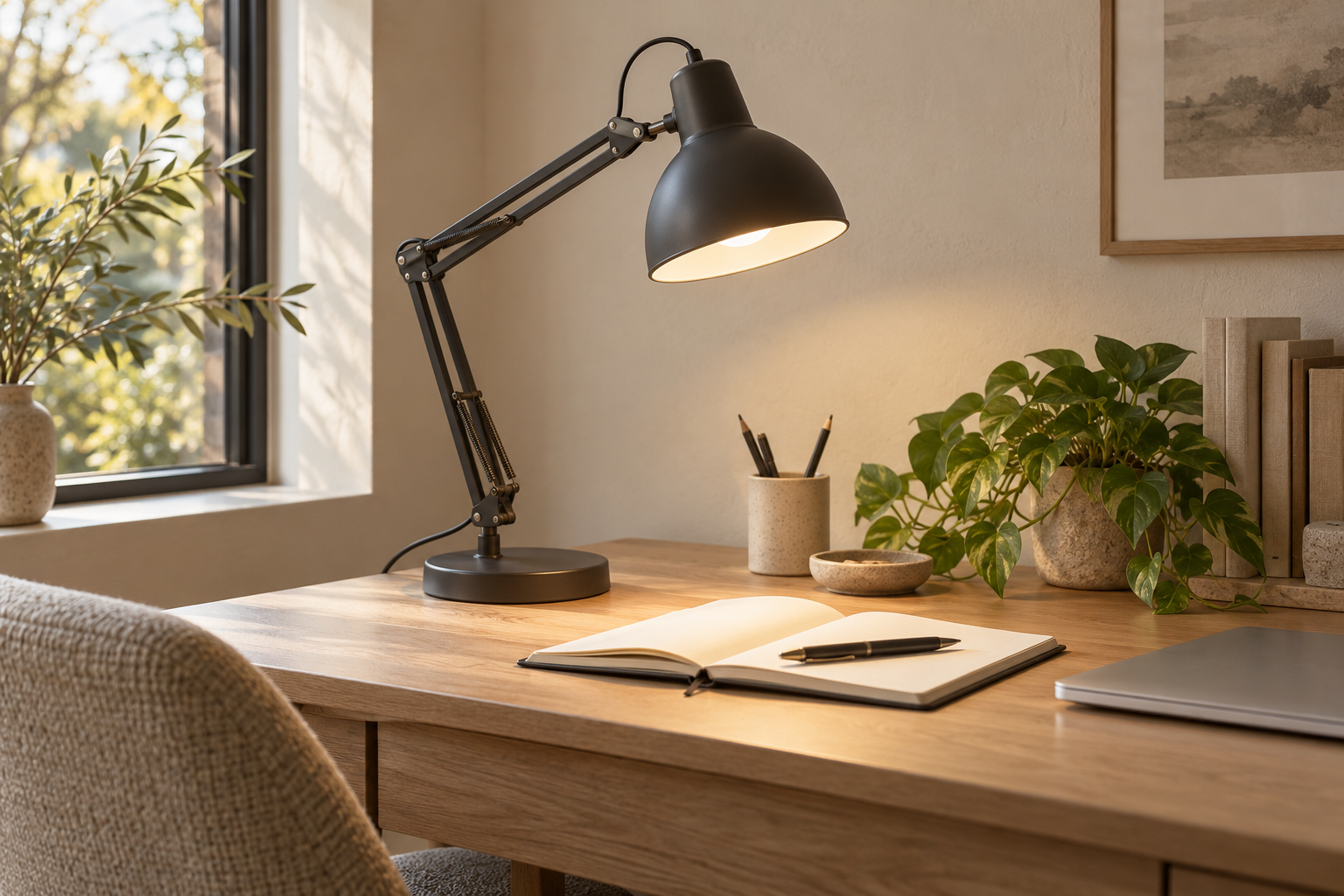
Charcoal task lamp in an oak home office nook
Check reach as well as base size.
For working, studying and making

Desk lamps that fit the job

An adjustable head lets you move the light towards a notebook, keyboard or craft project. Check the arm's reach before choosing a small base: a compact lamp is only useful if it can reach the part of the desk you use.

For a narrow surface, compare a clamp lamp with a freestanding design. A clamp needs an accessible edge, enough clearance underneath and a jaw opening suited to the desk thickness. A weighted base is easier to move, but takes up permanent space.

What to check on a desk lamp

Look at how the head tilts and whether the arm stays where you put it. Check where the switch sits, whether brightness resets when power is disconnected, and whether the supplied cable will reach your socket. If you work with a monitor, try positions that keep the light source and its reflection out of your view.

Arm reachBase or clampLight directionControls
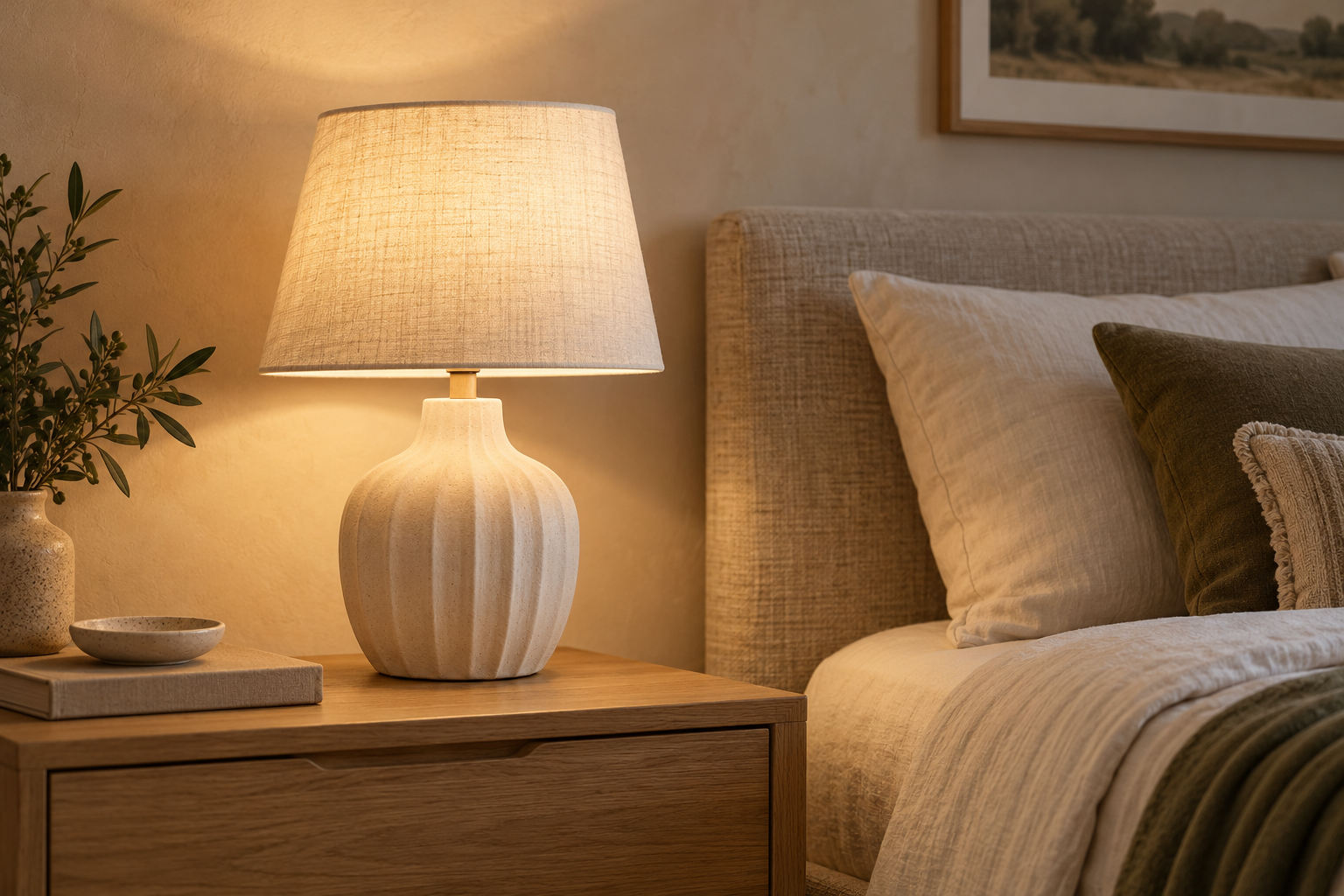
Sculptural ceramic bedside lamp on an oak nightstand
Leave room for the things already on your bedside.
For a quieter end to the day

Bedside lamps with easy controls

Start with the switch. You should be able to find and use it from your normal position in bed. A large touch area can be convenient, but check the sequence: some lamps make you cycle through brighter settings before switching off.

Then consider the shade and the lowest light setting. A lamp can look softly lit in a photograph while its exposed bulb feels uncomfortable from a pillow. Compare the lamp's overall height with the bedside table and where your eyes will be.

Thinking about wireless charging?

Confirm that your phone and case suit the charging standard. Check whether the lamp includes the required power adapter and whether charging and lighting can work together as you expect. A charging pad adds useful convenience only if it leaves enough space for the rest of your bedside items.

Switch positionLow settingShade heightPhone fit
A rechargeable lamp with a battery and charging connectionCHECK THE SETTING
Runtime depends on how the lamp is used.
For moving the light with you

Rechargeable and cordless lamps

A cordless lamp suits a dining table, a shelf away from a socket or a room where the layout changes often. Look closely at what the advertised battery runtime actually covers. The longest figure may use the lowest brightness setting.

Check the charging connection, the cable supplied and whether the lamp works while charging. Think about where it will recharge between uses. A tidy charging routine matters more than an impressive battery figure you cannot reproduce.

Can a cordless lamp go outside?

Only choose outdoor use when the manufacturer specifically supports the conditions you have in mind. A rechargeable design is not automatically weather-resistant. Follow the stated limits for moisture, temperature, charging and storage, and check whether the charger is intended for indoor use.

Runtime conditionsCharging portBrightness stepsIntended use
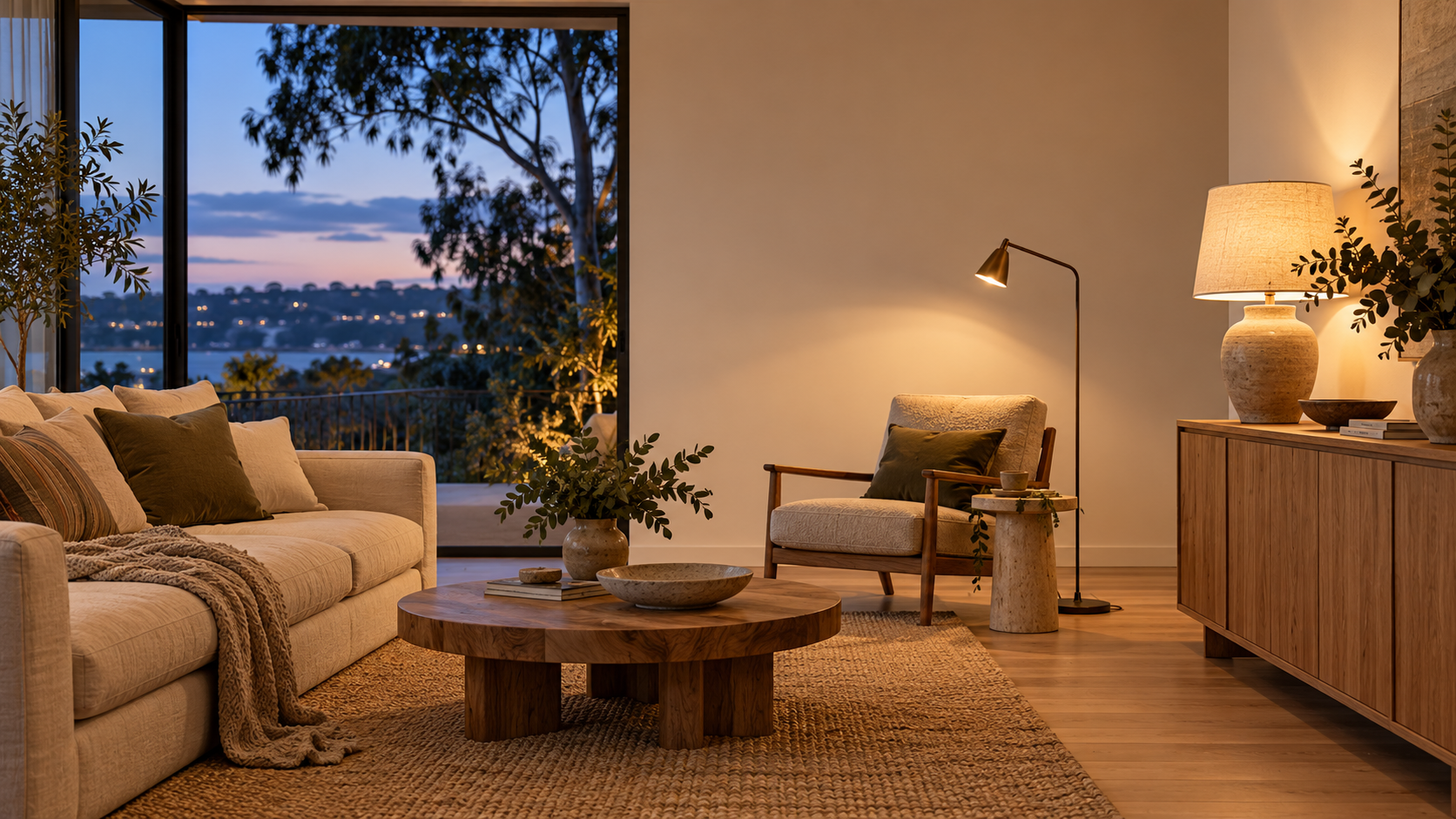
Warm lamp light in a home at blue hour
Place the beam on the page, with the source out of view.
For the next few chapters

Reading lamps with useful reach

Choose a lamp that brings the light to the page while you sit comfortably. A floor lamp can work beside an armchair; a clip lamp can suit a headboard or shelf if its clamp is compatible and secure.

Check the light from your reading position. A shade that hides the source while standing may leave it exposed when you sit down. An adjustable head gives you more options, especially if different people share the chair.

What about brightness and glare?

Choose enough control to make the page comfortable against the surrounding room. If a lamp is difficult to use, try changing its position before assuming that a different colour temperature will solve the problem. Reflections from glossy pages and nearby screens depend on the angle of the light.

Seated positionHead angleShade coverageNearby reflections
Product formats to compare

Lamps for Australian homes.
Take a closer look.

Real product photos, published specifications and a few buying checks to start your comparison.

As an Amazon Associate I earn from qualifying purchases. These buttons open model searches. Confirm the exact model, seller and power supply on Amazon.

These are researched examples, not hands-on test results. International manufacturer information does not establish Australian availability or local support. For reach and glare checks, read the Australian desk lamp guide.

05 / Think beyond one lamp

Give each light
a job to do.

A room can use different lights for different moments. Start with the places you spend time, then decide what each one needs.

Three lighting layers: ambient light across a room, task light over a page and accent light on a feature01 / AMBIENT02 / TASK03 / ACCENT
THE ROOM

Ambient light

General illumination helps you move around and see the space. A floor or table lamp can contribute, depending on its shade and the direction of its light.

THE ACTIVITY

Task light

Bring light to what you are doing: a page, a workbench or a desk. An adjustable lamp lets you change that position when the task changes.

THE DETAIL

Accent light

Draw attention to a shelf, artwork or an interesting surface. This is a different job from lighting an entire room or a reading area.

06 / Choose the useful shape

A quick comparison.

These are practical trade-offs between lamp types. The right choice depends on the space, not a universal winner.

Lamp typeUseful whenCheck before buying
Adjustable desk lampYour work moves between a screen, paper and small tasks.Arm reach, head tilt and how much space the base uses.
Clamp lampYou want to keep the desktop clear.Desk thickness, clamp opening and clearance underneath.
Shaded bedside lampYou want a softer-looking light beside the bed.Switch position, shade coverage and overall height.
Cordless table lampYou need light away from a socket or move it regularly.Runtime at your setting, charge time and supplied cable.
Reading floor lampThere is no side table beside your chair.Base clearance, head reach and the light from seated height.
Clip-on reading lampA compatible headboard or shelf can hold the light.Grip, surface protection, adjustability and cable route.

On a small screen, scroll the table horizontally to see each buying check.

07 / Before you press buy

Make it work
in an Australian home.

A familiar product photo does not tell you which version is in the box. Match the listing details to the exact model you intend to buy.

The exact model

Compare the model number, colour and included accessories. Similar lamps can have different controls, charging connections or light settings.

Power and charging

Check whether the listing includes an Australian power supply or needs a separate USB adapter. Read the lamp's input requirements and the supplied adapter details.

Support after purchase

Read the seller's warranty and return information. Check who handles a fault, where the item ships from and what support is available for that version.

Actual dimensions

Measure the free space before browsing. Include the shade's widest point, arm movement and the room a cable or clamp will need behind the furniture.

Bulb or integrated LED

For a replaceable bulb, confirm the fitting, size and permitted rating. For an integrated light, look into repair options before assuming the light source can be replaced.

The everyday controls

Check brightness steps, switch position and what happens after power is disconnected. Convenient controls are worth more when they work the way you expect.

08 / The LampScout approach

Useful advice.
Clear about
its limits.

LampScout starts with the questions you need answered: will the lamp fit, can the light be aimed, are the controls practical and is the exact version suitable for your home?

A manufacturer's specification and a hands-on observation are different kinds of evidence. Published light output, battery runtime and charging claims should stay attached to their source and conditions. A researched assessment should be labelled as one.

The illustrations explain lamp types and buying decisions. Product cards use photos from their cited manufacturers. The light lab is a visual demonstration, not a measurement of a particular lamp.

How affiliate links support the site

As an Amazon Associate I earn from qualifying purchases. Amazon buttons on this homepage open model searches with affiliate tracking. Confirm the exact listing, seller, plug and availability before buying. Manufacturer links identify the specifications and product photos used here.

Lighting references

The Australian Government's guide to choosing the right lamp explains the details to compare, including colour temperature and beam angle. Its lumens and watts guide explains the difference between light output and power use.

09 / A few things worth knowing

Before you choose.

How do I choose a desk lamp for a small desk?

Measure the free surface and the desk edge first. A clamp can free up space, but only if the jaw fits and there is room below the desk. With a freestanding lamp, check both the base footprint and the arm's reach. A small base does not always mean a lamp fits neatly when extended.

Are lumens and watts the same thing?

No. Lumens describe light output; watts describe power use. Compare lumens when judging the amount of light, then consider how the shade or lamp head distributes it. A lamp can produce plenty of light while directing much of it away from your work.

Should I choose warm or cool white light?

Choose the appearance you prefer for the room and task. Warm white looks more amber; higher colour temperatures look less amber and can appear bluish. Adjustable colour temperature gives you options. The slider above illustrates that change, but your screen cannot show exactly how a real bulb will look.

Is a rechargeable lamp always suitable for reading?

No. Portability says nothing on its own about useful light on the page. Check the lamp's output, shade, height and brightness settings. Compare battery runtime at the setting you expect to use, especially if you read for long periods.

Can I use any LED bulb with a dimmer?

Check the bulb and dimmer compatibility information. Do not assume that every LED bulb supports dimming or works with every control. For a lamp with an integrated light source, follow the manufacturer's stated control and power requirements.

What is the difference between a touch lamp and a dimmable lamp?

A touch lamp describes how you operate it. A dimmable lamp describes its ability to change brightness. Some touch lamps have several brightness levels, while others only switch on and off. Check the actual sequence and available settings.

Does LampScout sell lamps?

LampScout is a guide to choosing lamps, rather than a shop. Retailers handle purchases, shipping and returns. Check the exact seller and listing details before ordering, even when a product name is familiar.

One room. One useful change.

Find the light
that feels at home.

Start with your space, then choose the details that matter to you.

Find your starting point